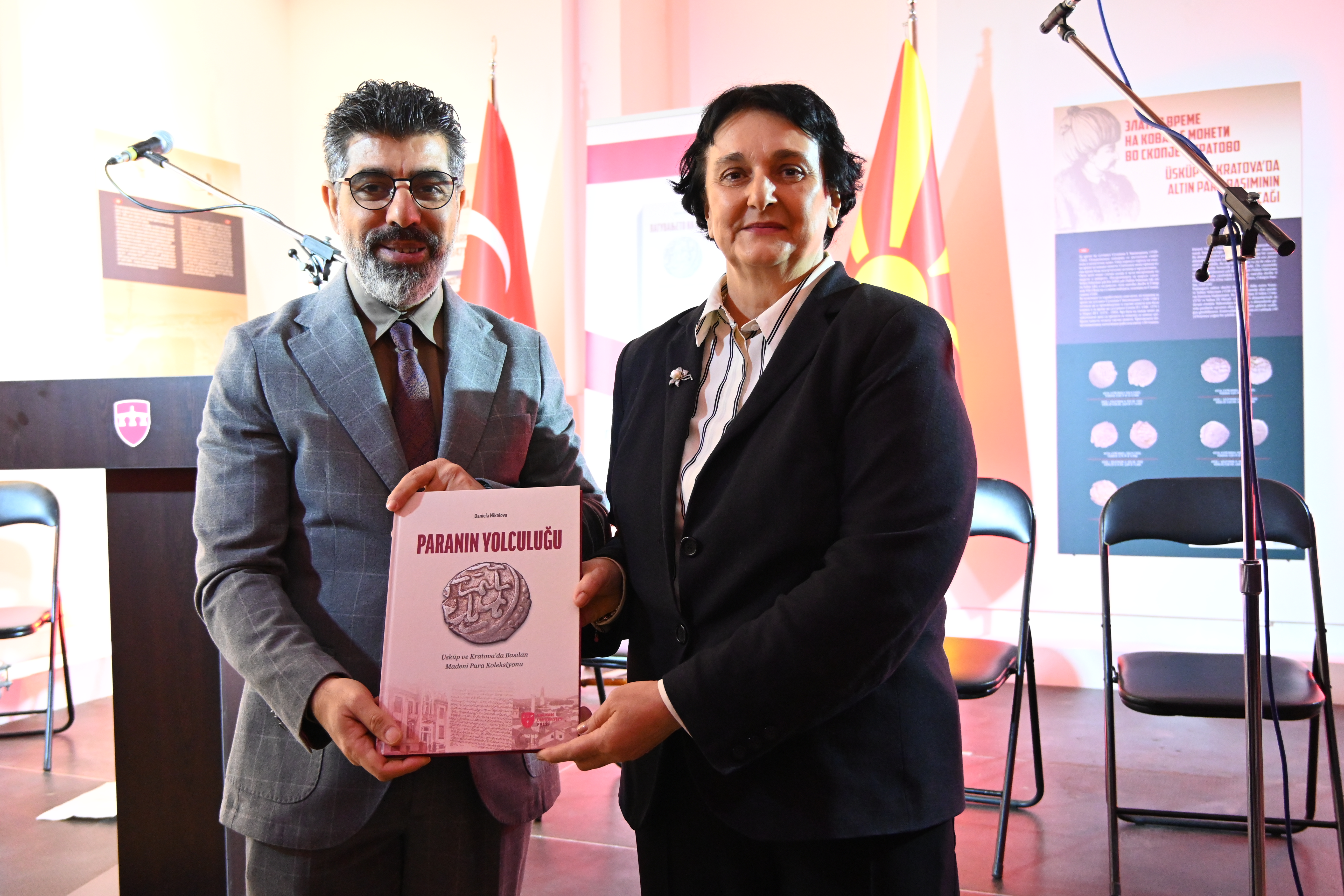
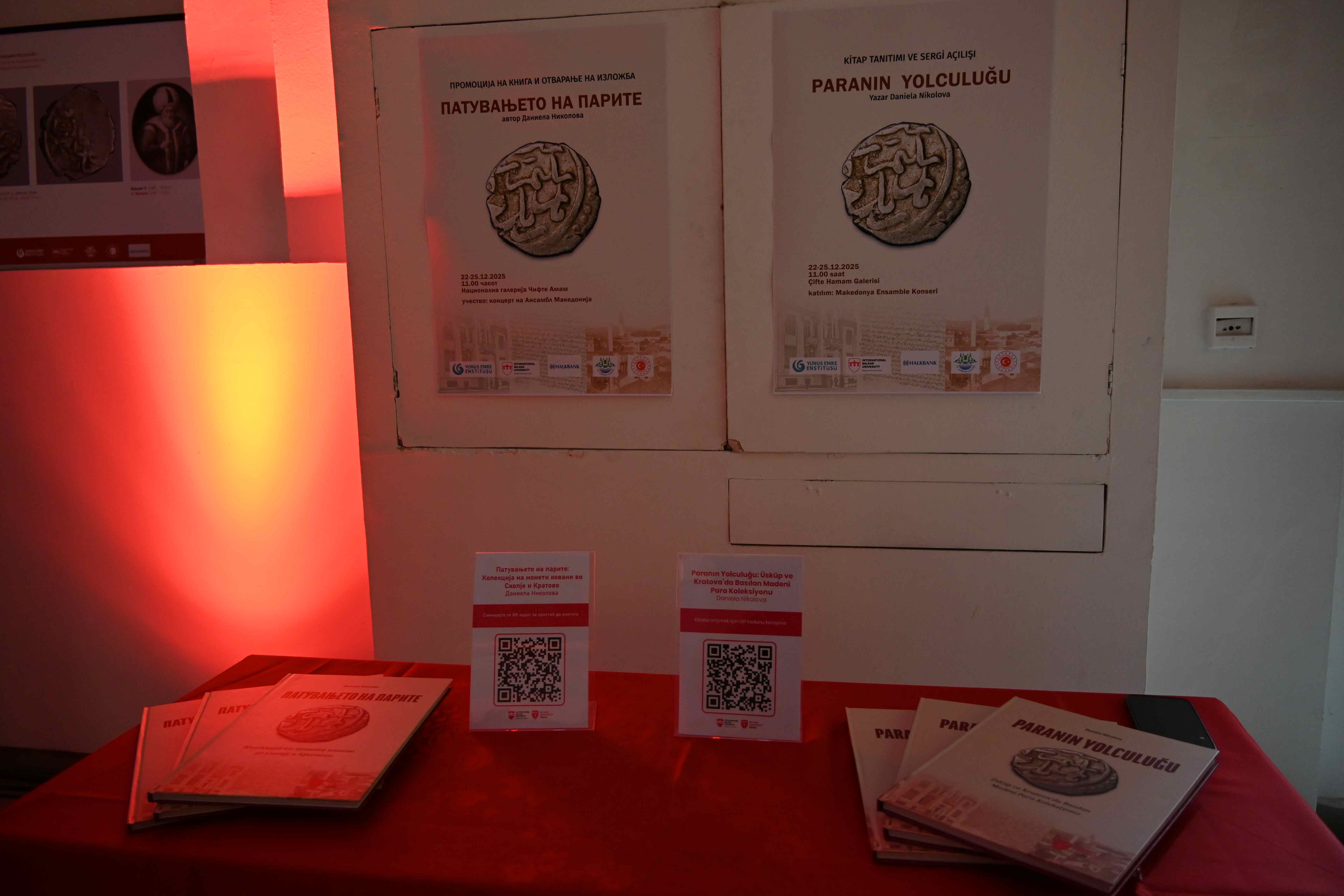
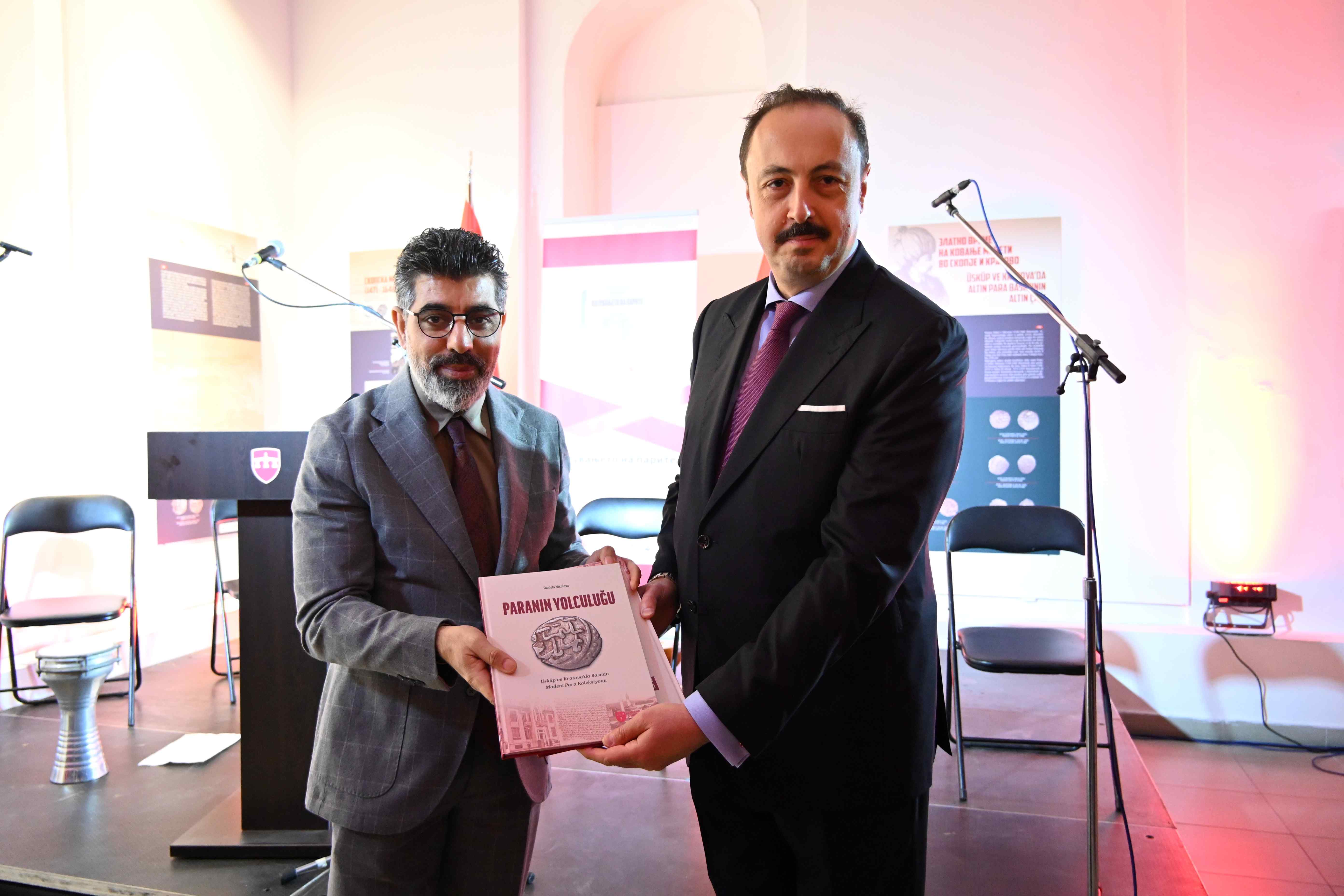
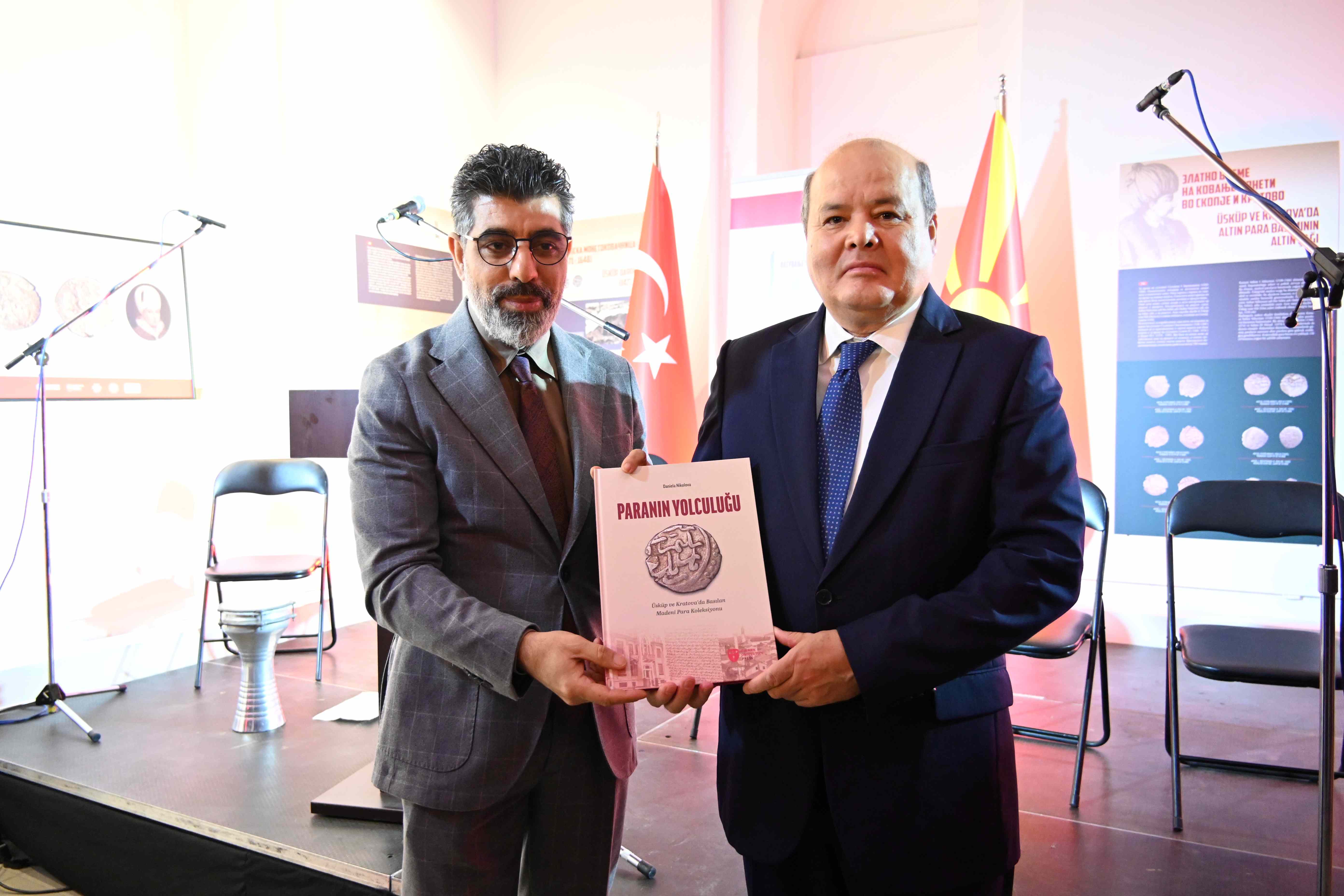
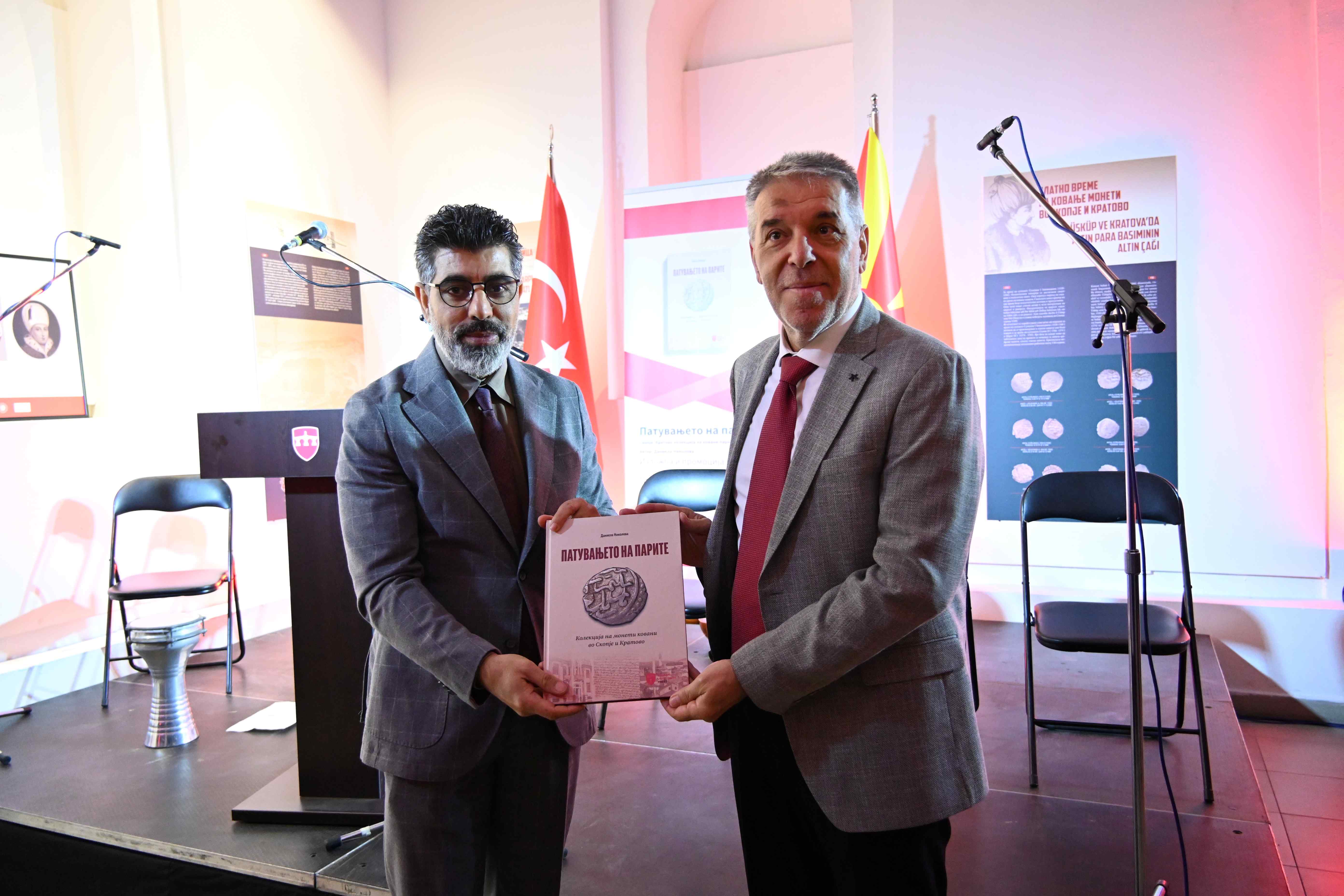

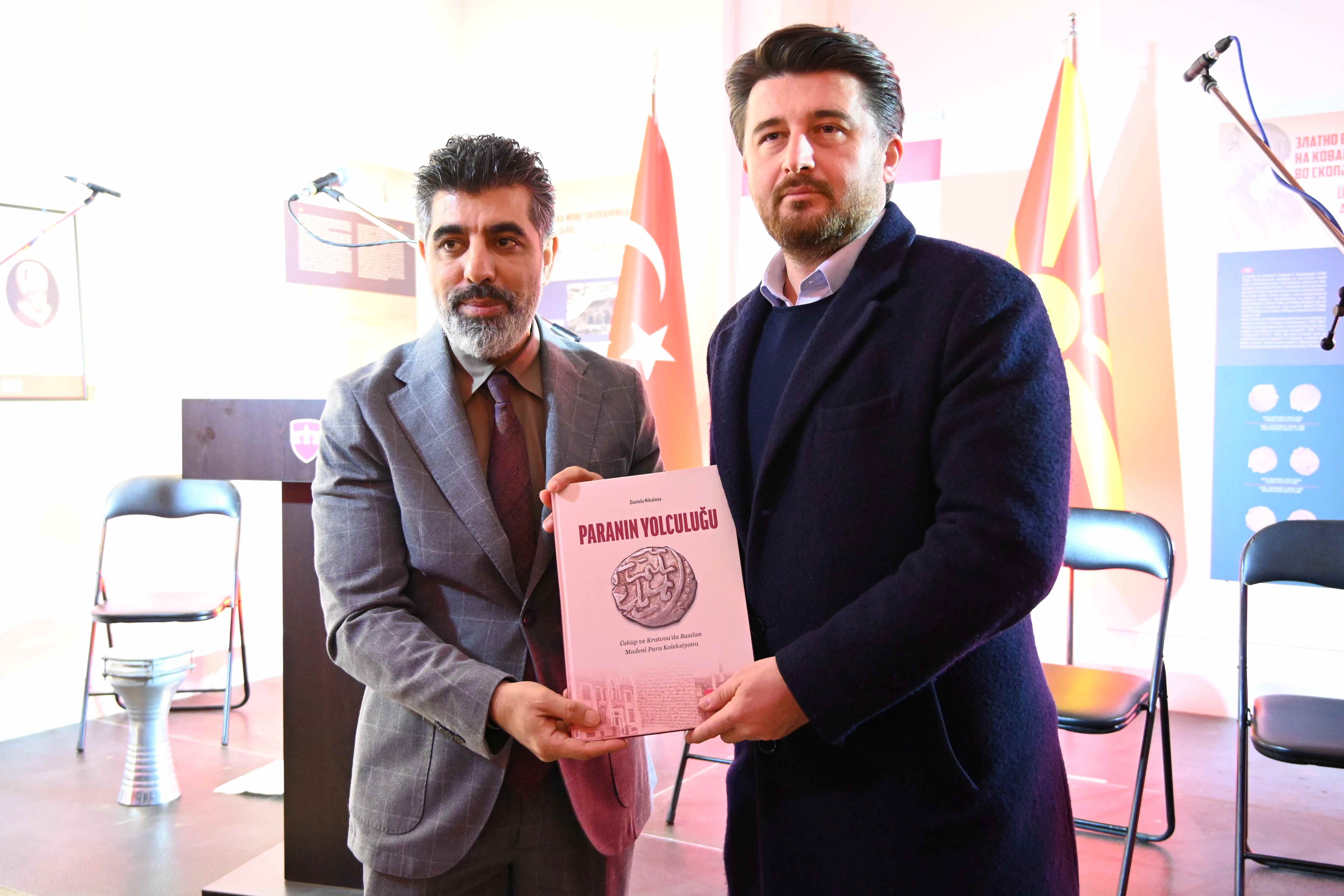
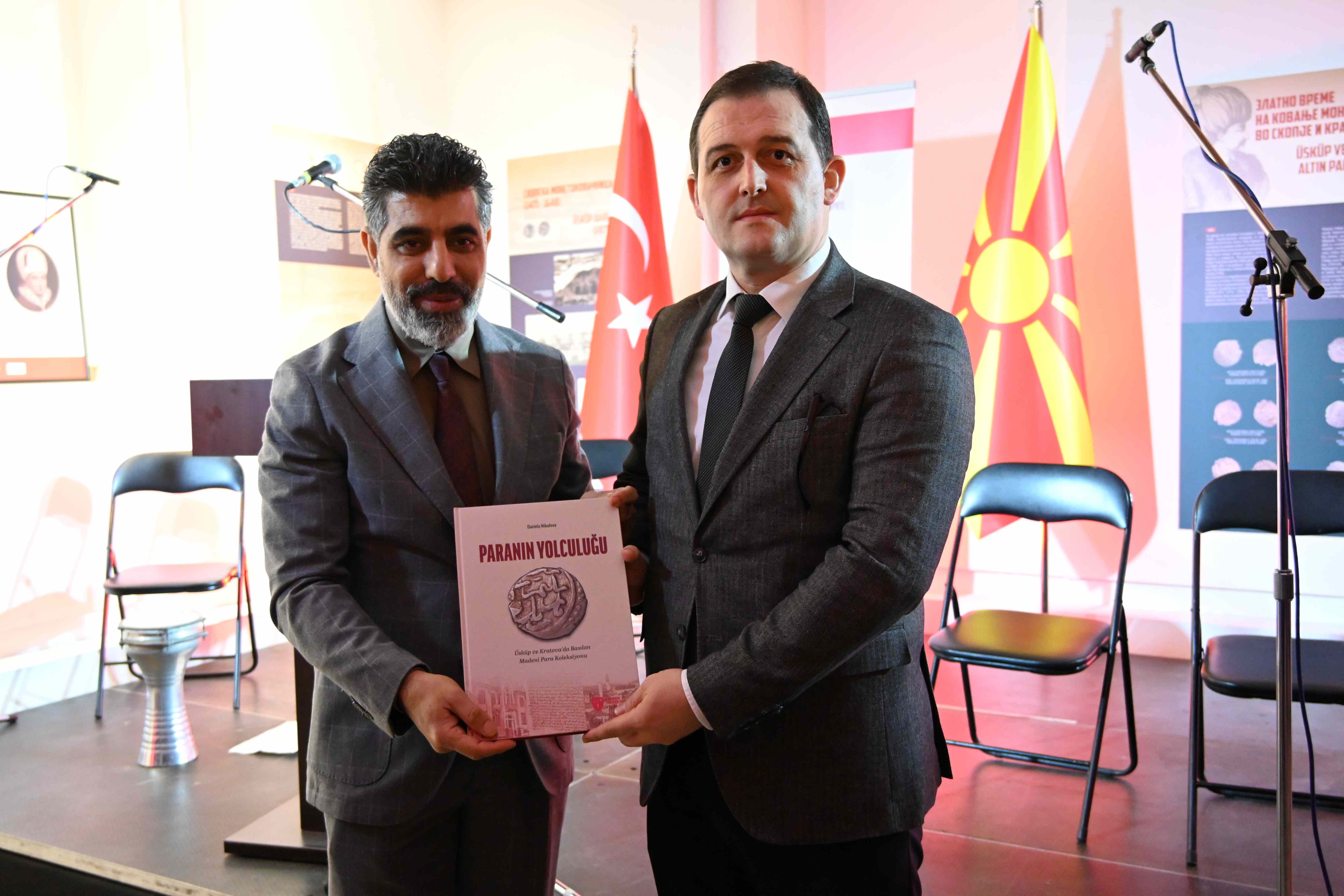
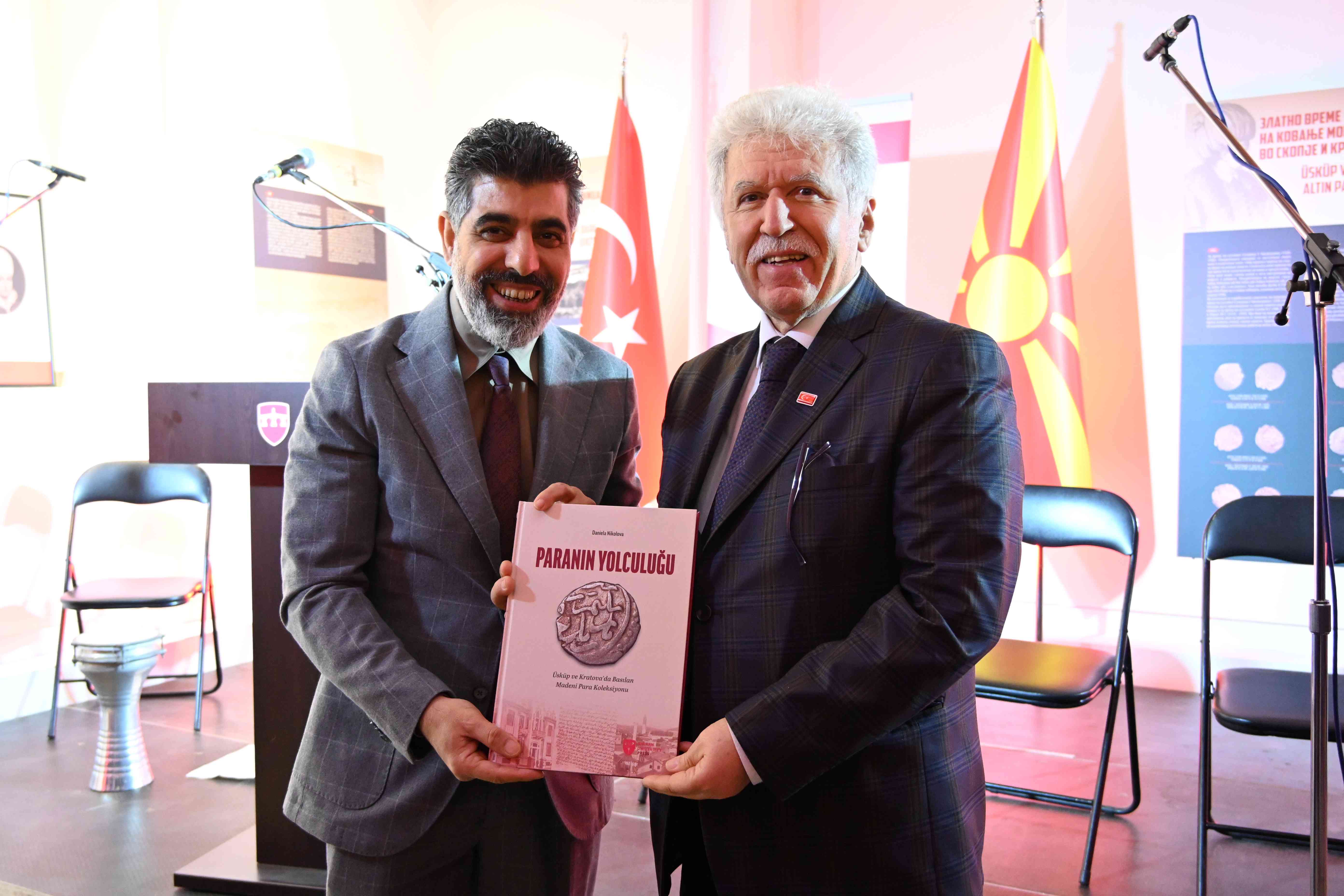
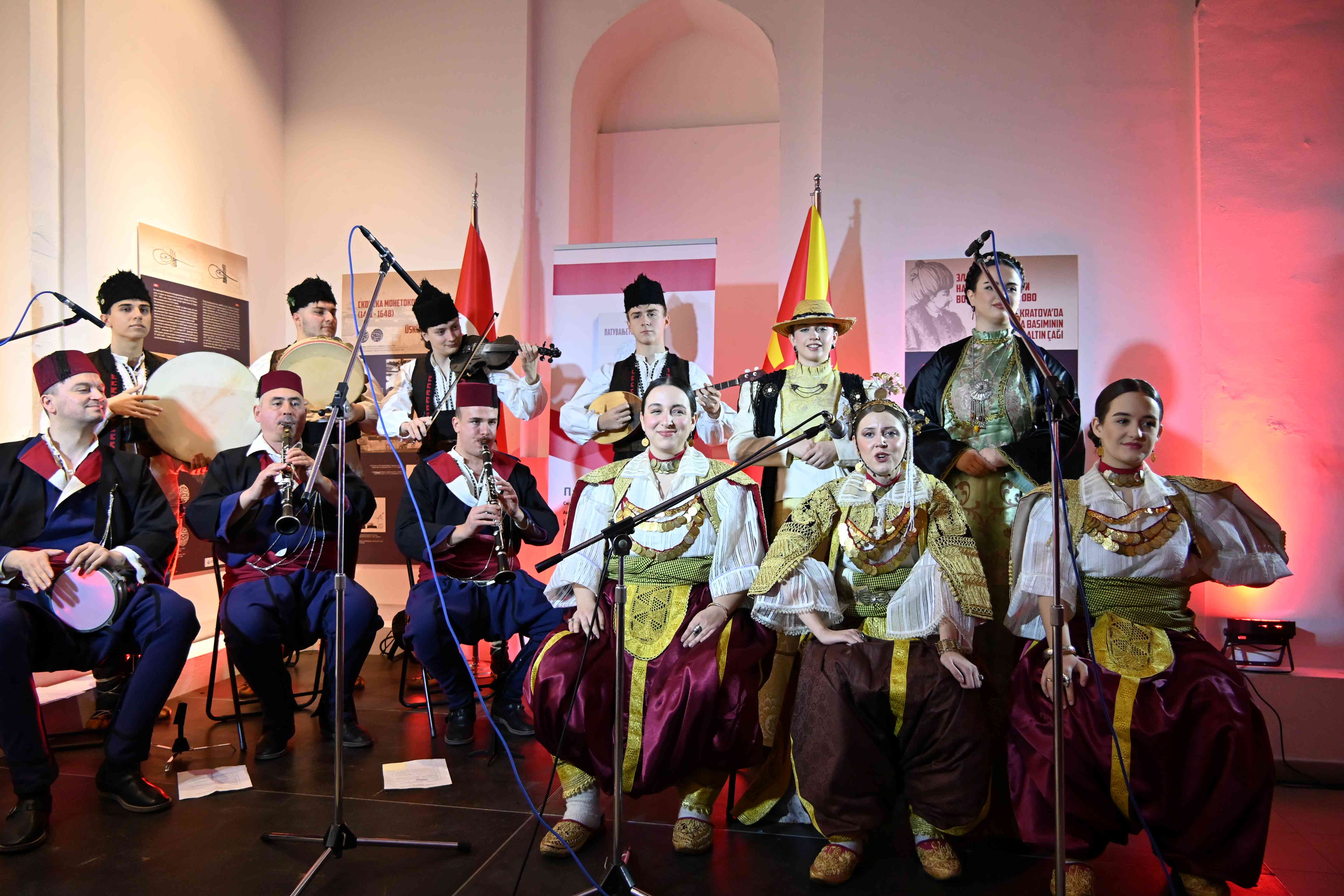
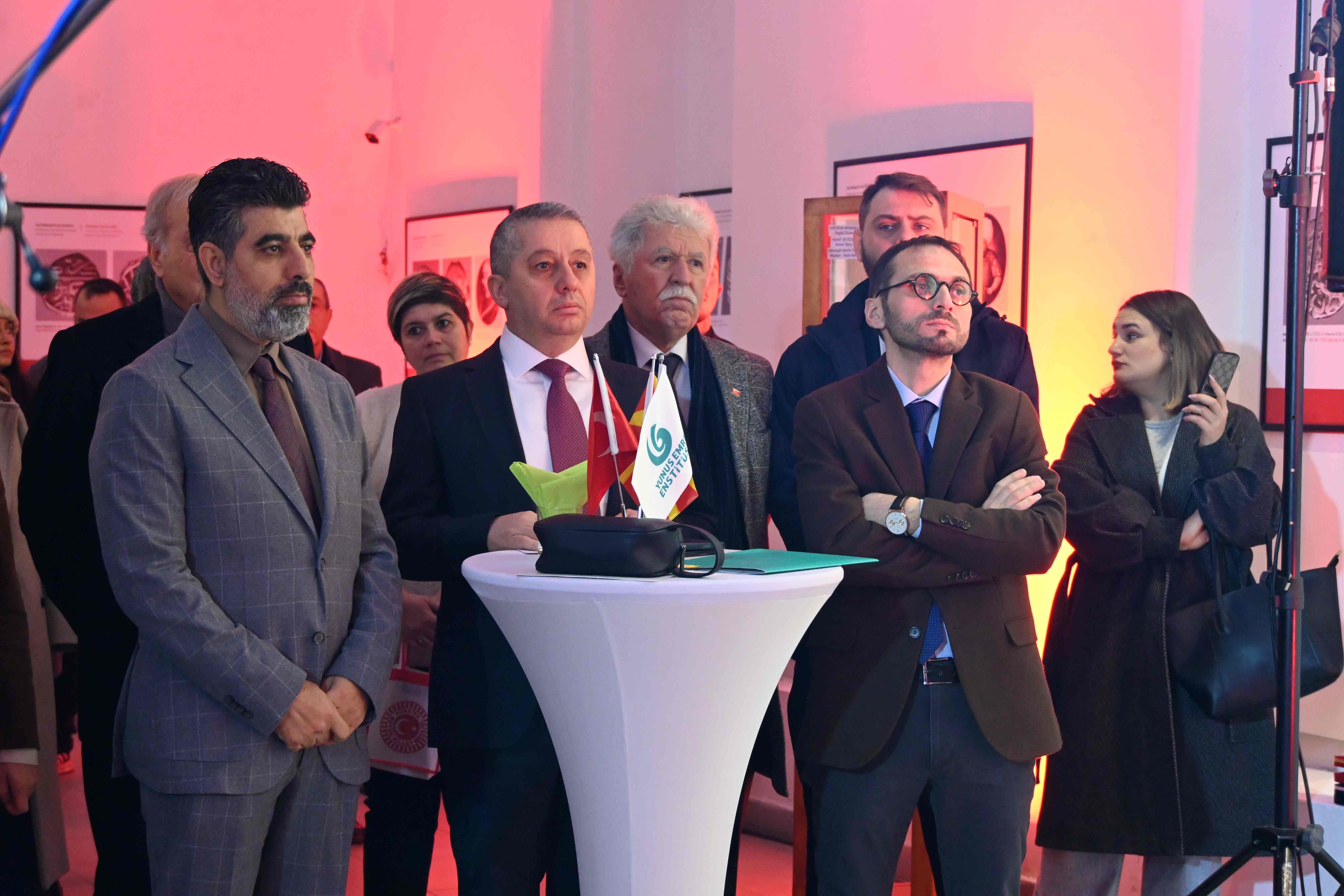
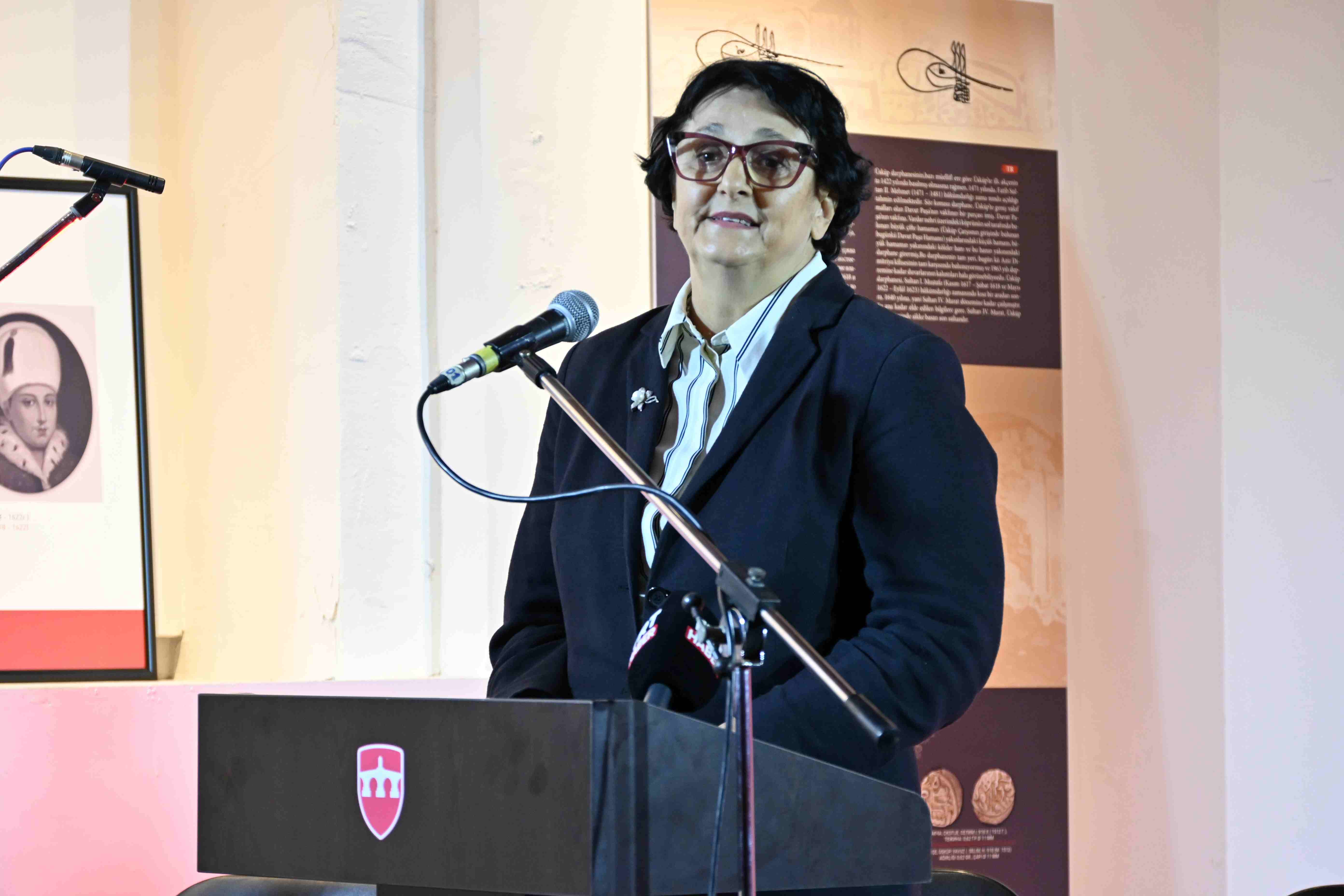
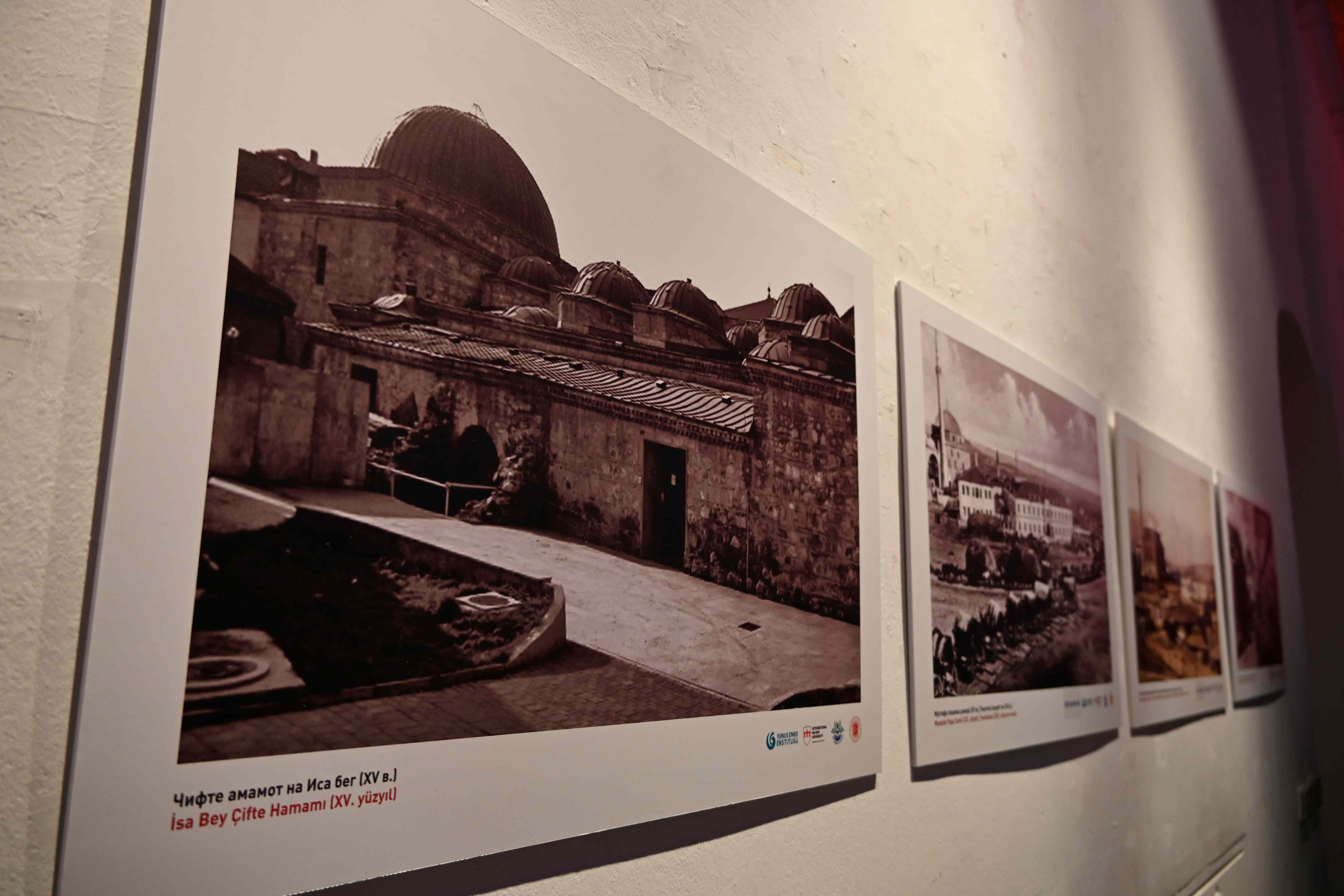
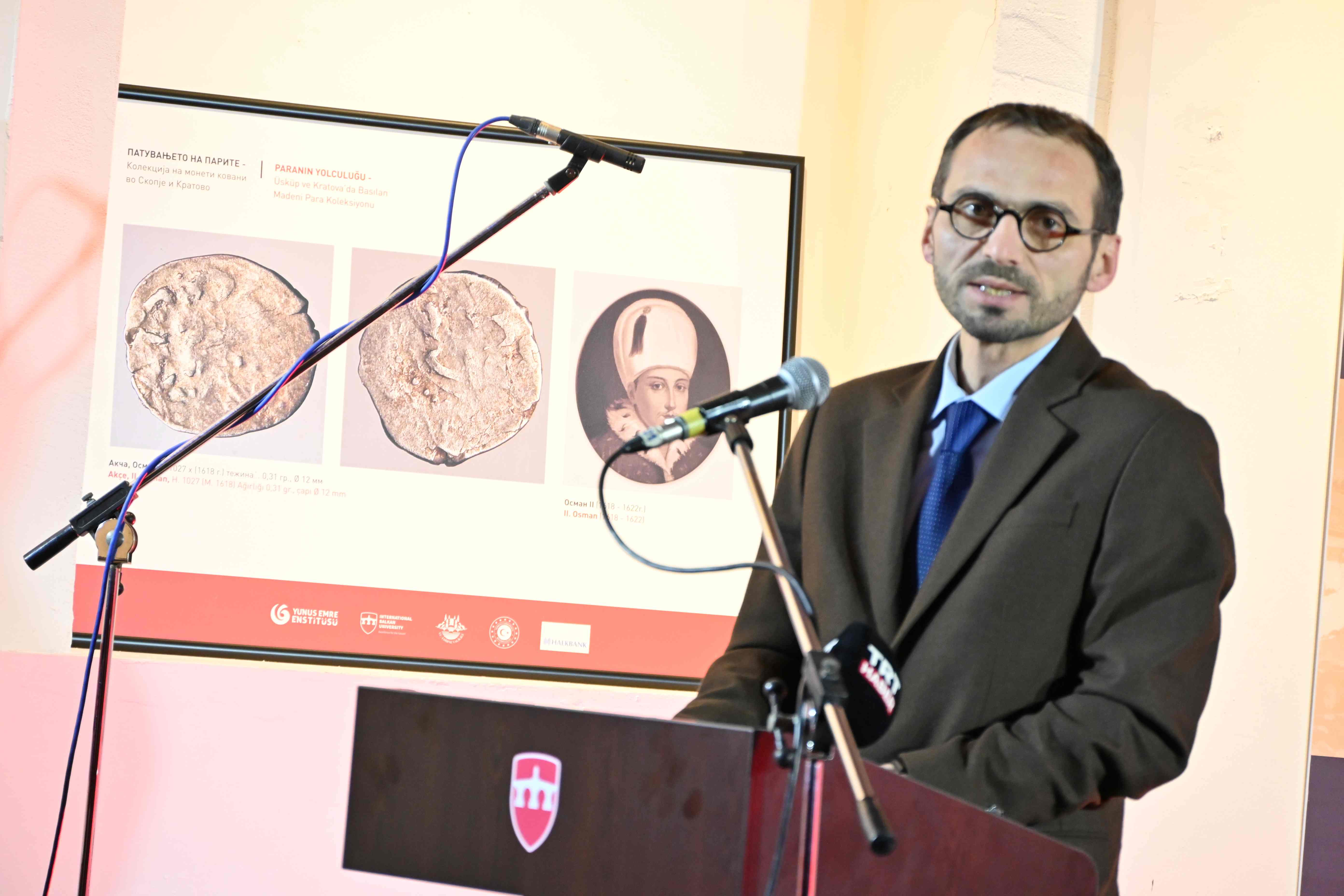
Today, we had the honor of hosting the exhibition and promotional event for the book “The Journey of Money: Collection of Coins Minted in Skopje and Kratovo” by Daniela Nikolova, held in the inspiring setting of Çifte Amam in the heart of Skopje’s Old Bazaar. By bringing this scholarly work into a public cultural venue, we reaffirmed our commitment to connecting academic production with society and to strengthening the visibility of heritage studies through meaningful, accessible engagement. The evening reflected our belief that universities have a responsibility not only to teach and research, but also to help communities understand their shared past through credible scholarship, interdisciplinary dialogue, and partnerships that elevate culture and education together.
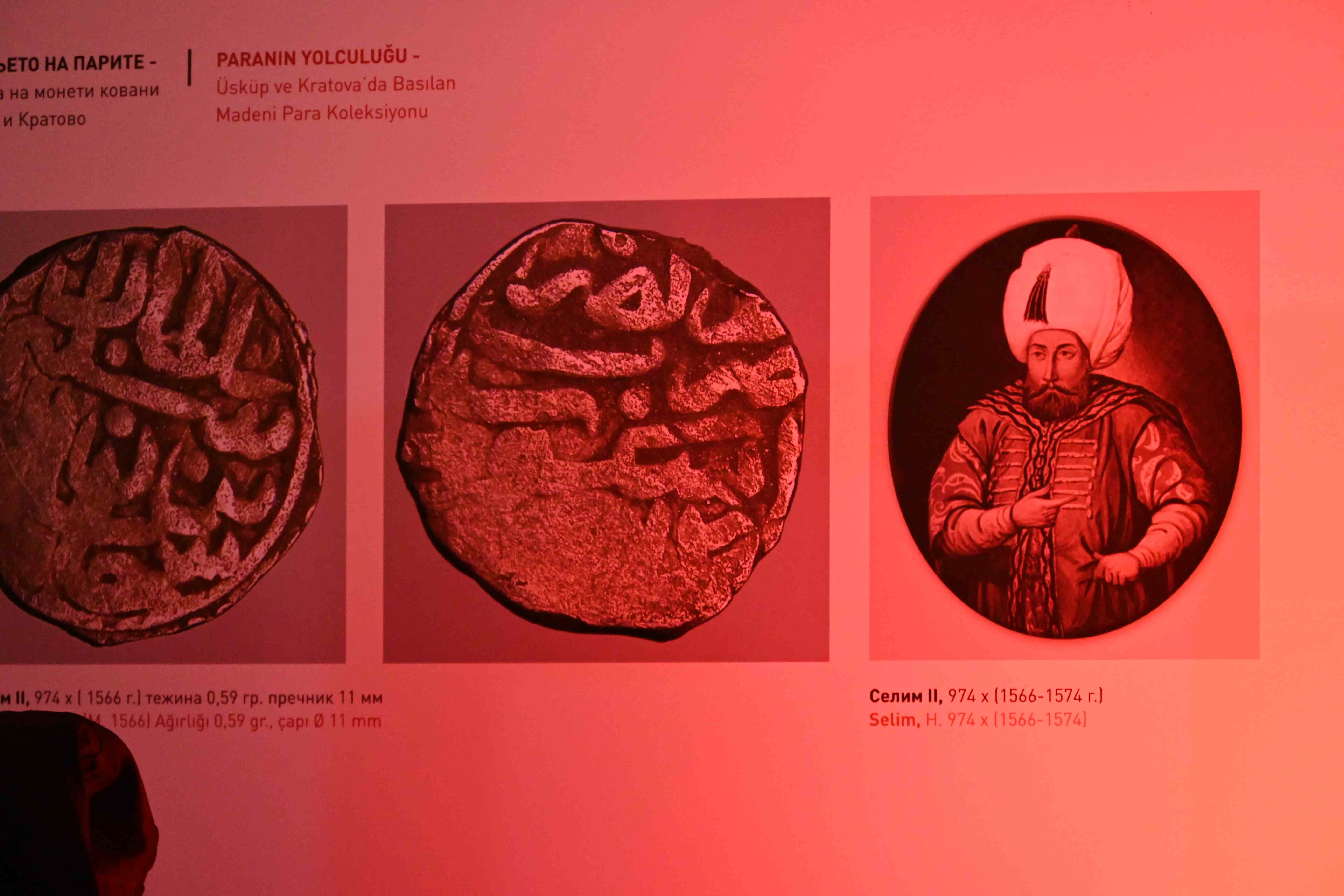
Published by Balkan University Press, the book examines the numismatic collections preserved in the Museum of Macedonia, with a special focus on coins minted in Skopje and Kratovo during the Ottoman period. Through its careful analysis, the study highlights the cultural and historical significance of these coins and contributes to filling important gaps in the written historical record, while also offering a richer lens for interpreting the socio-economic and political context of the Balkans. Daniela Nikolova, a historian and curator with extensive experience in museum work, research, and cultural heritage management, stands out as a leading expert in Ottoman numismatics in North Macedonia, and we were proud to present a work that brings this history vividly to life while reinforcing the importance of preserving and studying material culture as a universal scholarly value.
Our program was further enriched by distinguished opening speeches delivered by Prof. Dr. Lütfi Sunar, Rector of International Balkan University, H.E. Fatih Ulusoy, Ambassador of the Republic of Türkiye to North Macedonia, Mr. Yunus Dilber, Director of the Yunus Emre Institute in Skopje, and Dr. Fatih Şahbaz, Director of Halkbank Skopje. We extend our special thanks to the Municipality of Edirne (Türkiye) for their valuable support, and to all partner institutions and guests whose contributions helped make this gathering a true celebration of shared history, culture, and academic collaboration. As we continue to expand our cultural and scholarly initiatives, we are especially pleased that the book is available open-access in both Turkish and Macedonian via the Balkan University Press website, ensuring that this important research can reach readers, students, and researchers widely and sustainably.
.JPG)